Answering the needs of makers, crafters, and DIY professionals, this guide highlights five thick rubber blocks that excel at stamping, hammering, shaping metals, and precision lifting. Each product is best for a specific use case, from jewelry work to vehicle lifting assistance. The selections prioritize vibration dampening, flat surfaces, load-bearing capacity, and durability. Read on to compare features and choose the right block for your project.
| Product | Best For | Why It Stands Out |
|---|---|---|
| HARFINGTON Rubber Bench Block 7.8″x7.8″x0.4″ | Jewelry making and metal shaping | Flat, dense rubber reduces vibration and protects work surfaces. |
| 8 Pack Solid Rubber Auto Lift Pads | Vehicle lifting and maintenance | High load-bearing capacity with anti-slip surface for stability. |
| MIKMAYTOO Rubber Bench Block | Hammering, stamping, shaping metals | Thick, durable rubber with good vibration damping. |
| BBTO 8 Pieces RV Jack Blocks | Temporary stabilization and leveling | Slip-resistant, stabilizing blocks for uneven surfaces. |
| 2 Pcs HDPE Plastic Blocks | Cutting, milling, and fabrication | Hard plastic option for non-metal projects and tooling. |
HARFINGTON Rubber Bench Block

8 Pack Solid Rubber Auto Lift Pads

MIKMAYTOO Rubber Bench Block
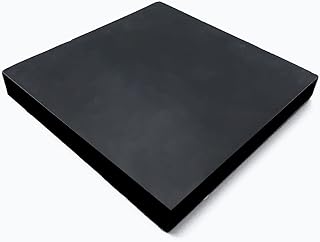
BBTO RV Jack Blocks

2 Pcs HDPE Plastic Blocks

Buying Guide
What to consider when choosing thick rubber blocks:
- Material and density: Higher density improves vibration damping and surface stability.
- Surface texture: Diamond or smooth finishes affect grip and slip resistance.
- Load capacity: For lifting blocks, ensure the block can handle the vehicle or equipment weight.
- Size and thickness: Match block dimensions to your work surface and project needs.
- Durability: Look for wear resistance and long-term shaping performance.
When to pick rubber vs. plastic:
- Rubber blocks are ideal for hammering, stamping, and jewelry work due to vibration dampening and surface protection.
- HDPE plastic blocks are better for cutting, milling, and when metal contact is minimal or cleanliness is a priority.
Usage tips for best results:
- Place a clean, flat workspace under the block to maximize stability.
- Inspect blocks for cracks or soft spots before heavy use.
- Use protective sleeves or mats to extend block life in high-impact scenarios.
FAQ
- Q: Are these blocks suitable for jewelry making?
- A: Yes, especially rubber blocks designed for stamping, hammering, and shaping metals.
- Q: Can I use rubber blocks for car lifting?
- A: Rubber blocks intended for lifting typically have higher load ratings; verify specifications before use.
- Q: Do these blocks affect metal finishes?
- A: Rubber blocks with flat, smooth surfaces protect finishes during shaping and flattening tasks.
- Q: Is size important for stability?
- A: Yes, larger blocks provide greater surface area for stability during heavy or precise work.
Add a Comment