Answering the search for value, these five machines offer a strong balance of features, ease of use, and affordable performance for hobbyists, beginners, and light-quilting projects. The list highlights machines from trusted brands, focusing on models that deliver reliable stitches, helpful accessories, and clear control interfaces. Whether you’re repairing, dressmaking, or dabbling in quilting, this guide helps identify which machine best fits your needs and budget.
Quick buyer overview table
| Product | Best For | Notable Strength |
|---|---|---|
| Brother XM2701 | Beginners and crafters | 27 built-in stitches and auto needle threader |
| Brother CS7000X | Quilting and sewing with table space | 70 built-in stitches and wide table |
| Brother XR9550 | Advanced sewers and quilters | 165 stitches and strong threading options |
| Brother XR3774 | Versatile quilting and everyday sewing | 37 stitches with automatic needle threader |
| SINGER 4411 | Heavy-duty projects on tougher fabrics | Up to 1,100 stitches per minute |
Brother XM2701: Portable Power for Beginners

The XM2701 offers 27 built-in stitches, including decorative and stretch options, plus an auto-size buttonhole. It is a solid choice for beginners and intermediate sewers who want variety without complexity. Its jam-resistant drop-in bobbin and automatic needle threader reduce setup time, while six included feet expand the range of common projects. This model is best for crafters who value straightforward operation and a compact footprint for a small workspace.
Who it’s best for: Beginners starting out, hobby sewists who want a versatile starter machine, and crafters who need portability. Why selected: It provides essential stitch variety with user-friendly threading and needle features at a reasonable price point. Caution: May not satisfy quilters needing heavy-duty stamina for dense fabrics over extended sessions.
Brother CS7000X: Large Workspace for Quilting
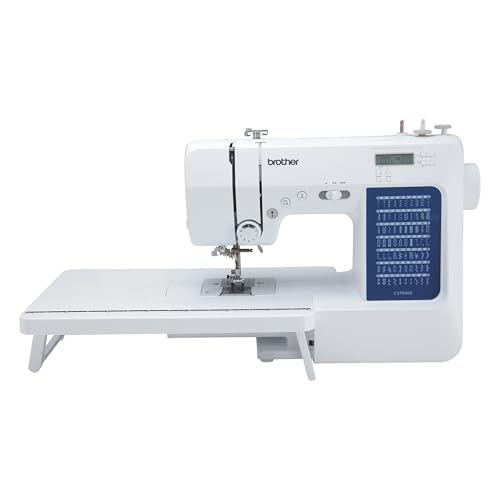
The CS7000X stands out with 70 built-in stitches and a wide table, making it well-suited for quilters and seasoned hobbyists who need extra workspace. Its improved needle threader and jam-resistant bobbin simplify setup, while the included accessories—such as a hard case and multiple feet—support a variety of projects. This model is better for users who plan regular quilting or larger sewing projects and want a stable, expansive platform.
Who it’s best for: Quilters and intermediate sewists who require space and stitch versatility. Why selected: The combination of many stitches, a wide table, and protective case facilitates longer sessions and more complex designs. Caution: The added footprint means it requires more workspace than compact models.
Brother XR9550: Computerized Flexibility

The XR9550 is a computerized workhorse with 165 stitches, including 8 auto-size buttonholes and 55 alphanumeric stitches. A fast needle threading system plus a drop-in bobbin helps streamline setup, while the protective hard cover and wide table protect the machine during storage and use. It suits dedicated hobbyists who want a broad stitch repertoire and a robust quilting capability.
Who it’s best for: Advanced hobbyists and serious sewers who need a large stitch library and reliable threading. Why selected: The wide stitch variety and included accessories support diverse projects from garment construction to quilting. Caution: The machine’s electronic features may require a learning curve for absolute beginners.
Brother XR3774: Entry to Quilting with Confidence

The XR3774 provides 37 built-in stitches and a 1-step buttonhole, plus automatic needle threading and a jam-resistant top bobbin. It includes a machine cover and wide table, making it a practical choice for sewers expanding into quilting or home decor. This model balances stitch variety with straightforward operation for intermediate users.
Who it’s best for: Sewers moving into quilting and home decor who need a larger selection of stitches without the complexity of higher-end models. Why selected: It combines essential quilting features with a compact footprint and practical accessories. Caution: Fewer high-end features than top-tier computerized machines may limit advanced customization.
SINGER 4411: High-Speed Heavy-Duty Option

The SINGER 4411 emphasizes speed and power, boasting up to 1,100 stitches per minute and a heavy-duty motor capable of working with denim, canvas, and leather. It offers 69 stitch applications for versatile sewing tasks, from repairs to fashion projects. This model is a strong fit for users who regularly tackle tough fabrics and require quick turnarounds.
Who it’s best for: DIYers who frequently sew heavy fabrics and need faster stitching. Why selected: The combination of power, speed, and a broad stitch range supports robust, durable projects. Caution: Heavier motors may be noisier and require a steadier operating surface.
Buying Guide: Key Considerations for Value and Fit
What will you sew most often? If you primarily fix hems or do occasional alterations, a lighter, portable model with essential stitches (like the XM2701 or XR3774) may be ideal. For quilting or larger projects, a machine with a wide table and more stitches (CS7000X, XR9550) offers greater versatility without sacrificing portability.
Do you want computerized features or a simple mechanical system? Computerized machines (XR9550, CS7000X) provide more stitches and auto features but have a slightly steeper learning curve. Mechanical machines (XR3774, XM2701) are typically easier to operate for beginners and require less maintenance.
How important are accessories and workspace? Machines that include a wide table, protective case, and additional feet support long sewing sessions and diverse techniques. If space is limited, prioritize compact models with essential capabilities and ergonomic controls.
Power and fabric types matter. For heavy fabrics, choose a machine marketed as heavy-duty or with higher torque, and ensure the model supports multiple layers without skipping stitches. For delicate fabrics, look for adjustable presser foot pressure and a smooth threading system to prevent damage.
Price vs. performance balance. Value-focused buyers should weigh stitch variety, durability, and included accessories against the initial cost. The best value often comes from machines that offer a robust feature set aligned with your primary projects rather than chasing the most stitches alone.
FAQ: Quick Answers for Buyers
- What’s the most versatile domestic sewing machine for beginners? The XM2701 balances variety and simplicity with a low learning curve, making it a reliable choice for new sewers.
- Is a wide table important for quilting? Yes. A wide table provides stability and surface area for large quilts and complex projects, reducing fabric management issues.
- Do I need a computerized machine to quilt effectively? Not necessarily. Computerized models offer more stitches and features, but mechanical or semi-computerized machines can handle most quilting tasks well with proper guidance.
- Which machine is best for sewing heavy fabrics? The SINGER 4411 stands out for heavy-duty work due to its powerful motor and high-speed capabilities, though a strong presser foot and correct needle choice are also essential.
- Are extra accessories important when buying? Yes. Extra feet, a wide table, and protective cases improve versatility and help prevent project-specific issues during setup and storage.
- How should I decide among these five machines? Match your primary projects (garment sewing, quilting, decor, repairs) with the machine’s stitch library, workspace, and stability. Consider your comfort with computerized features and your space constraints.
Add a Comment