Answering the buyer’s intent: this guide highlights the best tufting fabrics for rug making, focusing on durability, marked-line accuracy, and ease of use with tufting guns. The top picks are suited for beginners, hobbyists, and semi-professional rug-makers who need reliable cloth that holds up under gun pressure and helps keep patterns symmetric.
Summary table of selected products
| Product | Size (approx) | Key Benefit |
|---|---|---|
| BESGEER 80″ × 80″ Tufting Cloth with Marked Lines | 80″ x 80″ | Yellow marked lines, durable 65/35 blend |
| Yoquare 83″ x 59″ Primary Tufting Cloth | 83″ x 59″ | Clear mark lines, includes non-slip backing cloth |
| Tudomro 80″ x 80″ | 80″ x 80″ | Large size with non-slip backing option |
| DABLINE 80″ x 120″ | 80″ x 120″ | High density, marked lines for symmetry |
| Sukhumvit 118″ x 79″ | 118″ x 79″ | Large, marked lines and sturdy blend |
BESGEER 80″ × 80″ Tufting Cloth with Marked Lines

- Best for: Beginners and intermediate rug makers needing clear guides and reliable fabric for gun tufting.
- Why selected: Yellow lines every 5 cm help maintain symmetry during stretching and tufting; 65% polyester / 35% cotton blend offers flexibility and strength.
- Limitations: Primarily suited for standard tufting frames; very large projects may require additional backing or backing cloth.
Yoquare 83″ x 59″ Primary Tufting Cloth with Marked Lines

- Best for: Beginners and hobbyists building a first or second rug project.
- Why selected: Includes yellow marked lines every 5 cm to simplify marking and even stretching; dual-layer concept with a non-slip backing enhances stability during tufting.
- Limitations: The backing cloth is a separate component; ensure you have compatible setup for best results.
Tudomro 4 Pcs 80” X 80″ Tufting Cloth Set
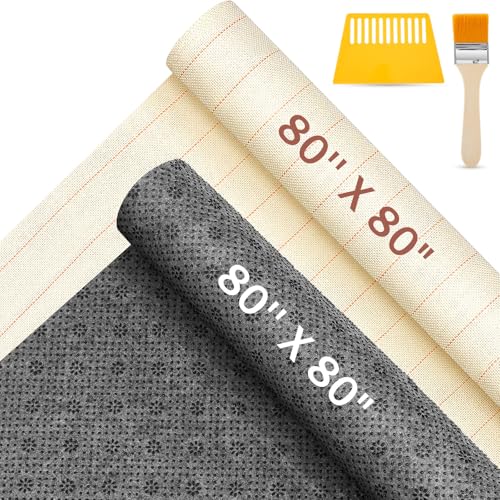
- Best for: Beginners who want a complete set with cleaning brush and glue scraper for clean work flow.
- Why selected: Large 80″ x 80″ fabric with non-slip backing option and included accessories support ongoing projects.
- Limitations: Some users may prefer a single-cloth package for focused projects; consider backup backing if needed.
DABLINE 80″ x 120″ Large Overlocking Primary Tufting Cloth

- Best for: Rug projects that require extra length and sturdiness to withstand tufting gun pressure.
- Why selected: High-density 26×26 stitches per square inch and a 65/35 blend for resilience and control; yellow lines assist with symmetry.
- Limitations: Larger size may require substantial frame space and adequate frame tensioning for best results.
Sukhumvit 118″ x 79″ Large Tufting Cloth

- Best for: Large-scale rug projects where fabric flexibility and marking lanes matter most.
- Why selected: Orange mark lines every 2 inches / 5 cm provide precise guidance; substantial surface area supports complex patterns.
- Limitations: Very large fabric requires careful handling to keep lines from shifting during cutting or sewing.
Buying Guide
What size do I need?
Choose a size that matches your frame and project scope. Larger cloths (like 118″ x 79″ or 80″ x 120″) are better for big rugs, while 80″ x 80″ works well for standard room-sized pieces.
Why are marked lines important?
Marked lines help you maintain symmetry and spacing across the tufting area. Yellow or orange lines every 5 cm or 2 inches guide consistent tufting density and alignment, reducing deviations on final rugs.
What blend should the fabric have?
Most durable tufting cloths use a 65% polyester and 35% cotton blend. This combination provides strength, flexibility, and resistance to tearing under tufting gun pressure.
Do I need backing cloth or non-slip features?
Backing or non-slip features help keep the fabric in place during tufting. Some sets include non-slip backing cloth or thicker backing options to improve stability on slippery frames.
What are common cautions?
High-density fabrics reduce snagging but may require careful cutting and precise frame tension. Very large fabrics can be cumbersome to handle and may require additional clamps or supports to prevent warping.
Which product type is best for a beginner?
Look for a bundle that includes a guide-marked cloth with easy-to-use lines, plus basic accessories like a cleaning brush, scraper, or a backing cloth. This combination minimizes setup steps and helps sustain momentum on your first projects.
Maintenance tips
- Keep cloth clean and free of lint that can affect tufting accuracy.
- Stretch the fabric evenly on the frame before tufting to prevent skewed results.
- Inspect for tears or fraying along the edges and use overlocking where available to extend cloth life.
FAQ
- What is Monk’s Cloth used for in tufting? It is a loom-woven fabric designed to hold loops of yarn tightly for punch needle and tufting projects, providing a stable surface for uniform stitches.
- Can I cut large tufting cloth to fit my frame? Yes, most cloths can be trimmed to fit; plan for a little extra margin to maintain even tension.
- Is marked-line cloth suitable for professional use? It can be, especially for patterns requiring precise symmetry, though professional workflows may require additional frame adjustments.
- Do I need additional backing cloth? It depends on your setup. Non-slip or backing fabrics can reduce movement and improve finished rug quality.
- Which blend lasts longest under gun pressure? A 65% polyester and 35% cotton blend typically offers good durability and resilience against puncture from tufting guns.
- Are these fabrics safe for beginners? Yes, these fabrics are designed to be approachable, with clear markings to guide beginners through the process.
Add a Comment