Answer: Top name tag designs for school help organize desks, promote inclusivity, and boost engagement. This guide highlights five practical options for classroom use, from simple self-adhesive labels to full desk-name plate sets. Best for elementary classrooms, preschools, and daycares aiming to improve seating plans and student recognition. Each option is chosen for durability, readability, and ease of use in busy environments. Use the summary table to compare core benefits at a glance.
| Product | Best For | Key Benefit |
|---|---|---|
| Hadley Designs Desk Name Tags – 36, 14.5×4.5 | Large classrooms | Vivid, premium cardstock; versatile desk decor |
| Hadley Designs Desk Name Tags – 36, 14.5×4.5 (Pastel) | Colorful learning spaces | Bright pastel tones to boost engagement |
| Homrelaxy 512 Pcs Name Tag Stickers | High-volume labeling | Lots of labels with durable, waterproof design |
| LIJUGITF 144 PCS Name Tags Stickers | Budget-friendly setup | Six designs for diverse labeling needs |
| Hadley Designs Desk Name Tags – 36, 13×3 | Smaller desks or cubbies | Compact, sturdy, classroom-ready |
Hadley Designs Desk Name Tags – 36, 14.5×4.5
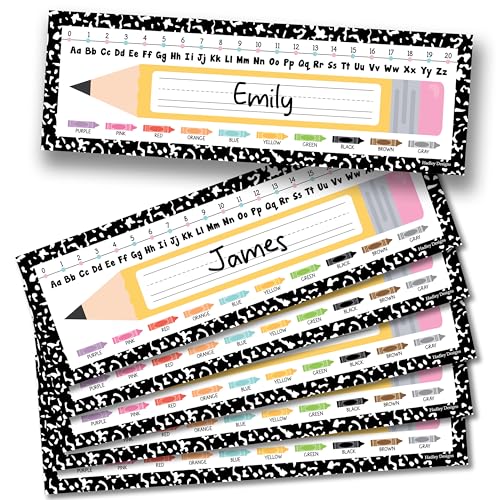
Best for large classrooms and flexible seating, these 14.5×4.5″ desk name plates are USA designed on premium cardstock. They support Preschool, Kindergarten, and Elementary settings, making students feel seen and recognized. The 36 tags help organize seating efficiently and foster a welcoming environment for new and returning students.
Who it’s best for: Teachers needing a uniform, durable labeling system for many students. Why chosen: Strong cardstock and clear visibility support long-term classroom use. Caution: Large tags may be less suited for very small desks or cubbies without space.
Hadley Designs Desk Name Tags – 36, 14.5×4.5 Pastel

Best for creative or color-driven classrooms, these pastel name plates brighten desks and support name-recognition activities. The same 36-piece set format accommodates medium to large classes, with easy-to-read lettering and a friendly aesthetic that resonates with younger learners.
Who it’s best for: Classrooms prioritizing colorful visuals to maintain engagement. Why chosen: Pastel tones can improve participation and handwriting practice. Caution: Pastel shades may be less legible from a distance in very bright lighting.
Homrelaxy 512 Pcs Name Tag Stickers

Best for large-scale labeling projects, this value pack provides 512 self-adhesive name tags with six border colors. Suitable for desks, lockers, cubbies, and backpacks. The waterproof, durable design supports daily wear and tear in busy classrooms.
Who it’s best for: Schools or homes that label many spaces or rotate groups often. Why chosen: High quantity reduces replacement needs. Caution: Stickers are generic labels, not pre-printed name plates.
LIJUGITF 144 PCS Name Tags Stickers

Best for diverse labeling needs, this 144-piece set includes six designs and a waterproof coating. Easy to write on with markers and attach to desks, lockers, or notebooks. The variety supports differentiation in learning centers or group activities.
Who it’s best for: Teachers needing flexible designs for multiple spaces. Why chosen: Six designs offer quick visual cues. Caution: Self-adhesive labels may not adhere well to very rough or textured surfaces.
Hadley Designs Desk Name Tags – 36, 13×3

Best for smaller desks or cubbies, these compact tags fit 3×9″ dimensions and help structure seating in tighter spaces. They maintain the same focus on recognition and classroom order, making them suitable for preschools and early elementary grades.
Who it’s best for: Classrooms with limited desk width or smaller groups. Why chosen: Compact design preserves space while delivering clear labeling. Caution: Smaller surface area means less room for long names or extra text.
Buying Guide
What should you consider when choosing school name tag designs?
- Measure desk width and height to ensure the label fits without crowding the surface.
- Choose high-contrast colors and larger font for distance viewing and handwriting practice.
- Look for sturdy cardstock or laminated labels, especially in busy classrooms and daycare environments.
- Select sets that match class size to minimize reordering during the year.
- Consider a mix of designs (solid, pastel, printable) to support different learning centers and activities.
- Favor self-adhesive options that stick to desks and cubbies but remove cleanly if you rotate seating.
- Waterproof or laminated options resist spills and cleaning, reducing wear over time.
Usage tips
- Use bold names with large initial letters to aid early readers.
- Pair name tags with color-coded centers to simplify grouping and transitions.
- Rotate labels seasonally to refresh classroom aesthetics and engagement.
Design considerations
- Pastel vs. vibrant designs: choose based on classroom mood and lighting.
- Text layout: consider first name only for quick recognition or full name for clarity in larger classes.
Accessibility and inclusion
- High-contrast colors improve readability for students with visual differences.
- Consistent naming conventions help new students find their spaces quickly.
Maintenance and care
- Wipeable surfaces and laminated materials extend life in high-traffic areas.
- Avoid overly glossy finishes if glare is an issue for students near windows.
FAQ
- Q: Are these name tags reusable? A: Many sets use self-adhesive backs that can be removed and reused with new names if cleanly peeled.
- Q: Which size is best for elementary classrooms? A: Larger 14.5×4.5″ or 14.5×4″ sizes are typically easy to read at a distance.
- Q: Can these be used for cubbies or lockers? A: Yes, most desk name tags and sticker sets stick well to multiple smooth surfaces.
- Q: Do these sets come with pre-printed names? A: The products listed are name-tag supplies; they require you to write the names yourself.
- Q: Are there color options to match classroom themes? A: Yes, several designs offer pastel or colorful styles to suit different themes.
- Q: Do these products support handwriting practice? A: Some designs are designed to help students practice writing in a readable format.
Add a Comment