Answering the question “which paper is best for printing art?” this guide highlights five standout options. Each product is suited to different art forms, from relief printing and inkjet reproductions to deckled-edge invitations. Use this overview to match your project to the right paper type, weight, and texture.
| Product | Best For | Key Benefit |
|---|---|---|
| Strathmore 300 Series Printmaking Paper Pad | Relief, screen printing, practice | Medium textured, 120 gsm, durable and absorbent |
| Strathmore 59-701 Textured Inkjet Paper | Pastel and watercolor reproductions | Lightly textured, suited for inkjet printing |
| White Cardstock 8.5 x 11, 230gsm | Invitations, posters, DIY cards | Heavy 85 lb / 230 gsm with smooth finish |
| Wanderings A5 Handmade Deckled Edge Cotton Paper | Watercolor, ink, and fine art cards | Cotton, deckled edge, archival quality |
| Epson Velvet Fine Art Paper | Fine art prints and photos | 100% cotton rag, museum quality, bright white |
Strathmore 300 Series Printmaking Paper Pad

Best for: Relief printing, linocut, screen printing, and practice work. The 120 g/m² weight and medium textured surface provide a balance of ink absorbency and surface strength, making it suitable for multiple passes and proofing.
Why selected: This Strathmore pad offers natural colored, lightweight paper that holds ink without excessive feathering. It’s a practical choice for students and hobbyists who want a reliable surface for trial runs and learn-by-doing projects.
Limitations to consider: It’s not intended for high-end fine art reproductions or heavy embossing. The lighter weight may not handle very thick applications without cockling under heavy ink loads.
Strathmore 59-701 Textured Inkjet Paper

Best for: Reproducing pastel or watercolor artwork via inkjet printing. The lightly textured surface helps create subtle texture in printed images while maintaining good color reproduction.
Why selected: This option is ideal when you need a white inkjet paper that accepts color without appearing flat. It’s a good balance between texture and smooth ink absorption for art prints and reference images.
Caution: Inkjet compatibility varies by printer model; check your device’s recommended paper type before printing to avoid jams or color inconsistencies.
White Cardstock 8.5 x 11, 230gsm

Best for: Invitations, scrapbooking, DIY cards, and poster-style projects where a sturdy, smooth surface is required. The 11 x 8.5 inch size fits standard printers and cutting tools.
Why selected: The cardstock’s heavy weight (230 gsm) and smooth matte finish support even ink absorption, producing clean lines and bold colors on both sides for most printers.
Limitation: It is a general-purpose cardstock, so it may not suit very thick textures or delicate watercolors that require a gentler surface.
Wanderings A5 Handmade Deckled Edge Cotton Paper

Best for: Watercolor, acrylics, ink, charcoal, and colored pencils on a natural, artisan surface. The deckled edge adds a traditional, handcrafted look to artworks and cards.
Why selected: This paper uses cotton and a plant-based sizing, offering archival quality with vibrant color retention. It’s well suited for projects that benefit from texture and a hand-made aesthetic.
Limitation: It is prepared for home printers but requires careful feeding, especially in standard consumer printers. Test a sheet first to ensure compatibility.
Epson Velvet Fine Art Paper
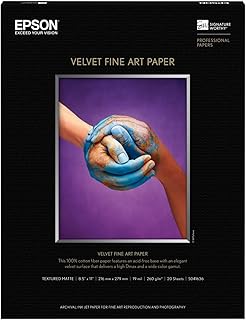
Best for: Museum-quality fine art prints and photographic reproductions. This 100% cotton rag paper offers excellent color reproduction and archival properties.
Why selected: The velvet texture provides a rich surface that enhances contrast and detail, making it a strong choice for serious art printing projects and gallery-quality outputs.
Limitation: This paper is typically more premium; ensure your printer can handle fine art media and heavier sheets without feed issues.
Buying Guide: Key Considerations For Printing Art Papers
What types of prints are you making?
Inkjet-compatible papers excel for reproductions and color-rich prints. For relief printing or screen prints, consider a heavier weight with surface texture that can take multiple passes without tearing.
What weight and texture do you need?
Weight affects durability and how much ink or paint the surface can hold. Textured surfaces create visible grain or tooth, while smooth papers suit clean lines and portraits. Choose per project requirements.
Is archival quality important?
Cotton rag and acid-free bases offer better longevity and color stability. For heirloom or gallery-ready pieces, archival options may be worth the extra cost.
Printer compatibility and handling
Check printer specifications for ink types, sheet thickness, and feed tolerance. Some handmade or deckled-edge papers may require manual feeding or test sheets to avoid jams.
Budget and practical use
Student or practice papers are more economical and ideal for trials. Higher-end papers improve presentation for final artwork or client proofs.
FAQ
- Which paper is best for watercolor prints? Cotton or 100% cotton rag papers with a suitable texture, such as the Wanderings deckled cotton paper, provide good color retention and watercolor-friendly surfaces.
- Can I print on handmade or deckled-edge papers? Yes, but you may need to adjust printer settings and feed sheets one at a time to avoid jams and ensure even ink absorption.
- What weight should I choose for art prints? For standard prints, 150–230 gsm is a versatile range; heavier weights are better for card stock and archival pieces.
- Are textured papers better for art cards? Textured papers add character to cards and invitations, but for crisp text and clean lines, a smooth surface works better.
- Is archival quality necessary for all prints? Not for every piece, but it helps preserve color and paper integrity for valuable or long-term displays.
- Which paper works well for practice and proofs? Lighter-weight, inexpensive inkjet or printmaking papers are ideal for proofs and practice runs before final prints.
Add a Comment