The best backing boards for picture framing provide sturdy, reliable support while protecting artwork from moisture and bending. This guide highlights five top options from Somime that suit common framing needs—from small prints to large posters. Ideal buyers include DIY crafters, event decorators, and photographers seeking affordable, durable mat boards. Below, you’ll find a quick product summary table and practical guidance to help you choose the right backing board for your project.
| Product | ||
|---|---|---|
| Somime 12 Pack Black Backing Boards, 11×14 | 11×14 | 12 |
| Somime 10-Pack 8×10 White Backing Board | 8×10 | 10 |
| Somime 10 Pack Backing Boards, 11×14 | 11×14 | 10 |
| Somime 12 Pack Black Backing Boards, 8×10 | 8×10 | 12 |
| Somime 25 Pack Backing Boards, 18×24 | 18×24 | 25 |
Somime 12 Pack Black Backing Boards, 11×14
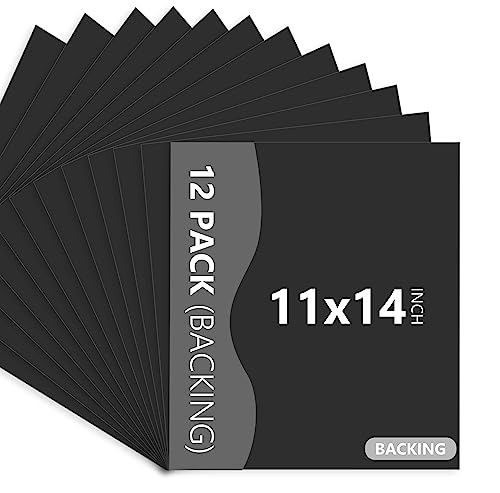
Best for standard 11×14 frames, these backing boards come in a 12-pack and are designed to protect art from deterioration while providing a stable surface for mats and bags. The boards use a 4-ply thickness to resist bending and offer a reliable base for professional-looking displays. The set ships in a box to prevent transit damage, making them a practical choice for beginners and seasoned framers alike.
Who this is for: ideal for hobbyists framing family photos, event décor, or classroom art projects. Choose this if you need multiple, affordable boards for ongoing framing work.
Caution: while sturdy, the boards are fabric-free cardboard and should be kept away from high moisture to avoid warping. You may want to seal edges if displaying in humid spaces.
Somime 10-Pack 8×10 White Uncut Backing Board

These 8×10 backing boards are tailored for compact frames and smaller artwork. The 4-ply construction provides solid support, and the uncut boards allow trimming to fit nonstandard sizes. The white surface offers a clean backdrop for photos, prints, and cards, helping colors pop without overpowering the subject.
Who this is for: best for portrait photos, small prints, or gift projects where a crisp, minimalist backdrop is desired. Better for standardized 8×10 frames and quick DIY projects.
Limitation: cutting accuracy matters for nonstandard shapes; plan measurements carefully to avoid misfits.
Somime 10 Pack Backing Boards, 11×14

Another solid option in 11×14, this set emphasizes stability with a 4-ply thickness (about 1/16 inch). The boards are designed to be cut to fit frames precisely, enabling you to craft professional-looking displays for photographs and artwork. They pair well with photo mats and clear bags to elevate presentation.
Who this is for: choose this if you are upgrading family wall art or displaying a scrapbook page within an 11×14 frame. It’s also suitable for event décor where larger mats are used.
Limitation: long-term humidity exposure can affect cardboard; store in dry conditions when not in use.
Somime 25 Pack Backing Boards, 18×24

Designed for larger posters or artwork, these 18×24 backing boards come in a 25-pack for efficient bulk framing. The boards maintain rigidity with four-ply thickness and are suitable for use with mat boards and protective clear bags to showcase expansive prints.
Who this is for: best for framing large prints, certificates, signboards, or wall art. A good pick for studios and classrooms that frame multiple large items.
Caution: larger boards can be heavier; ensure your frame can handle the added weight and support requirement.
Buying Guide
What size should you choose?
Measure your frame’s opening and the artwork thickness. Pick a backing board that fits the opening without needing excessive trimming. If you frequently frame mixed sizes, consider a mix of 8×10, 11×14, 12×18, and 18×24 boards for versatility.
How thick should backing boards be?
Most options here use a 4-ply construction (about 1/20 to 1/16 inch). A thicker board offers more rigidity for heavier art but may be harder to cut precisely. For lightweight prints, the standard thickness provides adequate protection while keeping framing costs reasonable.
Why select white versus black backing boards?
White backing boards give a neutral, clean backdrop that can brighten light-colored prints. Black boards may better hide tape or adhesive marks and can complement dark frames. Your choice should align with the artwork’s color palette and the frame finish.
How to trim backing boards safely?
Use a sharp utility knife or a drywall saw with a straight edge to cut panels to size. Mark measurements clearly, cut slowly, and test-fit before final assembly to avoid overcuts.
Where should backing boards be stored?
Keep them flat in a dry, cool environment to prevent warping. Store in their original packaging until ready to use, and avoid exposing them to moisture or direct sunlight.
Durability considerations
Choose boards with sturdy 4-ply construction for long-term framing projects. For frequently opened frames, consider sealed or bagged options to minimize contact with dust and humidity.
FAQ
- Do backing boards improve picture longevity? Yes. They provide a rigid base, protection from moisture, and support for mats and adhesives.
- Can I cut backing boards to nonstandard shapes? Yes, most boards can be trimmed with a sharp blade to fit custom frames.
- Which backing board size is best for gallery walls? For variety, mix common sizes like 8×10, 11×14, and 12×18 to accommodate multiple frame types.
- Are black backing boards better for certain displays? They can reduce visibility of tape lines and complement darker frames.
- How should I store unused backing boards? Keep them flat in a dry, low-humidity area away from direct sun.
- Do backing boards come with mats? Some listings include uncut mat boards; always verify the exact contents in each pack.
Add a Comment