When precision matters, choose a screen printing machine that offers stable positioning, repeatable results, and space efficiency. This guide highlights five top options suited for casual hobbyists, small studios, and frequent DIY printers. Each selection emphasizes accuracy, ease of use, and compatibility with flat substrates like fabrics, plastics, wood, and more. Read on to find the best fit for your project scale and workspace.
| Product | Type | Printing Area | Stations | Best For |
|---|---|---|---|---|
| VEVOR Screen Printing Machine, 4 Color 1 Station | 4 Color / 1 Station | 21.2 x 17.7 in / 54 x 45 cm | 4 Color, 1 Station | Small footprint, occasional printers needing color capability |
| VEVOR Screen Printing Machine, 1 Color 1 Station | 1 Color / 1 Station | 21.2 x 17.7 in / 54 x 45 cm | 1 Station | Compact, simple setups for beginners or single-color designs |
| VEVOR Screen Printing Machine, 4 Color 4 Station | 4 Color / 4 Station | 21.2 x 17.7 in / 54 x 45 cm | 4 Stations | Multiple-color designs with higher throughput |
| VEVOR Screen Printing Machine, 4 Color 2 Station | 4 Color / 2 Station | 21.2 x 17.7 in / 54 x 45 cm | 2 Stations | Balanced color capability and faster cycle times |
| Speedball Beginner Screen Printing Craft Vinyl Kit | DIY Vinyl Kit | Not fixed; home DIY projects | N/A | Ideal for quick vinyl transfers and introductory screen printing |
Buyer note: The machines listed here emphasize stable operation, precise alignment, and adaptable materials. Use this table as a quick reference to compare color capacity, number of stations, and suitability for beginners, hobbyists, or small studios.
VEVOR 4 Color 1 Station Screen Printer

Printing Area: 21.2 x 17.7 in / 54 x 45 cm. This 4-color, 1-station model uses a 360° rotatable fuselage with independent metal bearings to ensure stable operation and accurate positioning. It is compact enough for small spaces and is suitable for occasional printers who still want multiple color designs. Best for hobbyists who prioritize space efficiency with occasional color capability. Caution: The machine requires mounting to a workbench for maximum stability, and setup time is longer for beginners due to the multiple color stations.
VEVOR 1 Color 1 Station Screen Printer

Printing Area: 21.2 x 17.7 in / 54 x 45 cm. This model emphasizes a compact footprint with a rational fuselage structure and independent metal bearings for stable positioning. Best for beginners or users focusing on single-color designs or smaller runs. Limitation: Fewer color options mean trades off color versatility for simplicity and space.
VEVOR 4 Color 4 Station Screen Printer

Printing Area: 21.2 x 17.7 in / 54 x 45 cm. Features a 360° rotatable fuselage with independent metal bearings for stable, repeatable results across four stations. Best for multi-color designs and higher-volume runs. Caution: The added stations increase setup complexity and space requirements; ensure adequate bench space before purchase.
VEVOR 4 Color 2 Station Screen Printer

Printing Area: 21.2 x 17.7 in / 54 x 45 cm. Combines four-color capability with two stations and a 360° rotatable frame. Best for intermediate users who want higher throughput without the full footprint of a 4-station press. Limitation: Heavier build may require sturdier mounting and more bench space than single-station units.
Speedball Beginner Screen Printing Craft Vinyl Kit
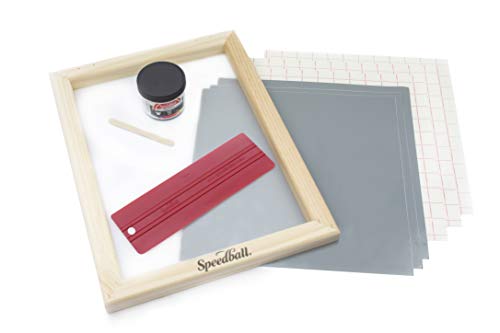
Kit Focus: DIY vinyl meets screen printing, designed for quick, home-based transfers. Best for newcomers seeking an affordable, low-friction entry into screen printing with vinyl applications. Caution: This kit is more about vinyl transfers than traditional multi-color screen printing on fabrics, and may not suit users needing large, repetitive textile runs.
Buying Guide
- Workspace and footprint: If space is limited, consider a 1-Station or 2-Station model with a compact frame. For higher throughput and multi-color designs, a 4-Station press is ideal but requires more bench space.
- Color and station requirements: For logos or designs with multiple colors, prefer 4-Color models. For simple or beginner projects, 1-Color or 2-Station options reduce complexity and setup time.
- Stability and accuracy: Look for a rotatable fuselage with independent bearings and a double-layer positioning system to minimize deviations and improve repeatability.
- Material compatibility: Ensure the machine supports common flat substrates—fabric, plastics, metal, glass, ceramics, wood—and check if your target items require special preparation or curing steps.
- Ease of use vs. versatility: Beginner kits (like vinyl-focused kits) offer quick wins but may lack long-term expansion potential. More robust presses suit growing studios but need investment in time and space.
Frequently Asked Questions
- What is the difference between 1-station and 4-station presses?
- Is a rotatable frame important for alignment?
- Do these machines require special inks or emulsions?
- Can beginners use these presses for textiles beyond T-shirts?
- What maintenance is typical for screen printing presses?
1-station presses print one color at a time and are simpler and smaller; 4-station presses enable multi-color designs in fewer passes, increasing throughput.
Yes. A 360° rotatable frame with independent bearings improves accuracy and repeatability across colors and passes.
The products listed focus on general screen printing practices; check each model’s recommended materials and curing methods for best results.
Yes. Many flat substrates such as pillowcases, fabrics, and other flat materials are supported, but some items may require adaptation or different squeegee pressures.
Regularly check frame clamps, bearings, and the alignment stops; clean residue after printing and inspect for loose screws to maintain accuracy over time.
Product Quick References
- Best for space-conscious hobbyists: VEVOR 4 Color 1 Station
- Best for simple, beginner setups: VEVOR 1 Color 1 Station
- Best for high-color designs: VEVOR 4 Color 4 Station
- Best mid-range option: VEVOR 4 Color 2 Station
- Best affordable intro: Speedball Vinyl Kit
Add a Comment