The best serger sewing machine for a beginner depends on how much help you want with threading and which fabrics you plan to sew. The Brother 1034D is suited to buyers who want a metal-frame 3- or 4-thread machine, while the SINGER S0230 is a strong option for color-coded threading and differential feed. For additional setup guidance, consider the MARGAR; for accessible threading, consider the SewLaVie 360.
| Machine | Best For | Notable Feature |
|---|---|---|
| Brother 1034D | Buyers seeking a metal frame | Up to 1,300 stitches per minute |
| SINGER S0230 | New users sewing varied fabrics | Color-coded threading and differential feed |
| SINGER S0100 | Beginners who want to start with included setup | Arrives pre-threaded |
| MARGAR 3/4 Thread Serger | Users who value setup instructions | Color-coded paths and rethreading guide |
| SewLaVie 360 | Beginners prioritizing threading access | Wide-open threading area |
Brother 1034D Serger

The Brother 1034D is best for beginners who want a straightforward 3- or 4-thread serger with a metal frame. It offers an underlooper threader and a foot pedal for controlling sewing speed. Its listed maximum speed is 1,300 stitches per minute, which can help users move through projects quickly once they are comfortable operating the machine.
The product information says it can handle multiple layers of denim and other heavy materials. That makes it a more suitable choice for buyers who expect to sew heavier fabrics as well as everyday projects. It was selected for its stated range of thread capability, metal construction, and underlooper threading feature. Caution: A high maximum speed may take practice to control; beginners can use the foot pedal to manage their pace.
SINGER S0230 High Speed Serger
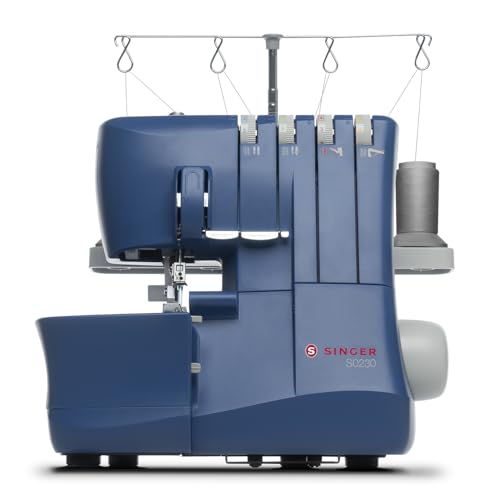
Choose the SINGER S0230 if you want a beginner-friendly threading guide and expect to sew knits, stretchy fabrics, or delicate sheers. It supports 2-, 3-, and 4-thread serging, with color-coded threading intended to make setup easier. Its adjustable differential feed is designed to reduce stretching and puckering, helping manage fabric that can distort during sewing.
The machine includes tweezers, needles, and a screwdriver, stored inside the cloth plate. These included tools support setup and routine adjustments without requiring buyers to source those listed accessories separately. The S0230 stands out for combining multiple thread options with differential feed. Caution: The listed features describe threading aids, but users still need to follow the threading instructions carefully.
SINGER S0100 High Speed Serger
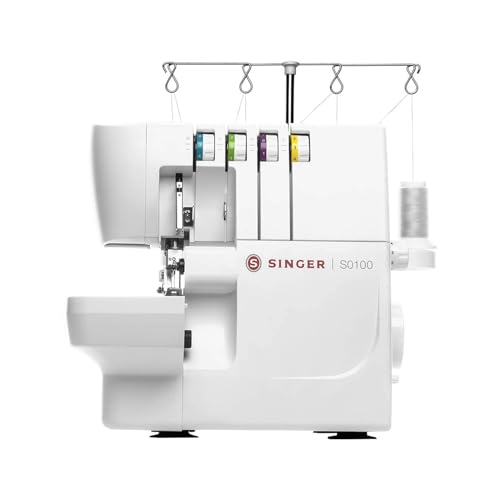
The SINGER S0100 is best for a beginner who wants to get started with the machine pre-threaded. It offers 2-, 3-, and 4-thread stitch options for seams, hems, and decorative edges. Its adjustable differential feed is intended to help prevent wavy seams on stretchy fabrics and puckering on lightweight materials.
Included accessories listed for this model include a general-purpose foot, tweezers, extra needles, cone adapters, a screwdriver, and a foot controller. The accessories are stored in the front compartment. This model was selected because its pre-threaded setup can reduce the initial setup burden and its thread choices cover several common serging tasks. Caution: Pre-threading helps with the initial setup, but users may need to learn how to rethread the machine later.
MARGAR 3/4 Thread Serger

The MARGAR serger is best for beginners who want setup material alongside the machine. It comes with a manual, rethreading instructions, and an accessory kit, and its package information points users to a video tutorial in the manual. Color-coded thread paths are designed to help identify where each thread goes.
This model supports 3- and 4-thread overlocking, automatic edge trimming, and 3-thread rolled hems. It also has an LED light and a vibration-damping rubber base. The listed maximum speed is 1,250 stitches per minute. These details make it a useful option for buyers comparing instructional support and stitch choices. Caution: The product guidance specifically advises reading the manual and watching the tutorial before use; threading is not entirely automatic.
SewLaVie 360 Serger

Choose the SewLaVie 360 if access to the threading area is a priority. Its open threading design is intended to make loopers easier to reach for setup and troubleshooting. The product also lists a visual alignment guide, 2-, 3-, and 4-thread capability, and 12 stitch types.
At a stated maximum of 1,300 stitches per minute, it offers speed alongside adjustable stitch length and overlock width. Its differential feed is designed to help control knits and lightweight fabrics, reduce unwanted wrinkling, and create gathering effects. It was selected for its combination of open access and listed stitch controls. Caution: The machine has several stitch and adjustment options, so beginners should learn each setting gradually using the manual.
Buying Guide: What Should Beginners Compare?
How much threading help do you need?
Threading is a key difference between these options. The SINGER S0230 and MARGAR use color-coded thread paths. The MARGAR also lists written and video guidance. The SINGER S0100 arrives pre-threaded, while the SewLaVie 360 emphasizes an open threading area. These features can make setup easier, but they do not remove the need to learn the machine’s threading sequence.
Which thread options suit your projects?
Machines with 3- and 4-thread capability cover common overlocking and seam-finishing tasks. The SINGER models and SewLaVie also list 2-thread capability, giving buyers additional stitch options. Check the product details and manual to confirm which configuration fits your intended projects.
Will you sew knits or delicate fabric?
Differential feed is a useful feature to compare when sewing stretchy or lightweight materials. The SINGER S0230, SINGER S0100, and SewLaVie 360 list differential feed. The SINGER descriptions specifically say it helps reduce stretching, puckering, or wavy seams. Follow fabric and stitch guidance when adjusting the feed.
Do speed and frame details matter?
The listed maximum speeds range from 1,250 to 1,300 stitches per minute for the models where speed is provided. Faster operation is not essential for learning; use the foot controller carefully and build speed as you gain confidence. The Brother lists a metal frame, while the MARGAR and SewLaVie descriptions highlight other construction or access features.
Frequently Asked Questions
Is a serger sewing machine suitable for beginners?
Yes. A beginner can learn serging by following the threading and operating instructions, practicing on scrap fabric, and starting at a controlled speed.
What does a serger do?
A serger trims and finishes fabric edges while forming an overlock stitch. Depending on the machine and setup, it can also create rolled hems and other edge finishes.
Is a 3-thread or 4-thread serger better for a beginner?
Both can be useful. A 3-thread setup supports edge finishing and some hems, while 4-thread overlocking is another common option for seams. Choose based on your projects and the machine’s instructions.
Do beginners need differential feed?
It can help when working with stretchy or lightweight fabrics because it adjusts how fabric moves through the machine. It is especially worth comparing if those fabrics are part of your sewing plans.
Can a serger replace a regular sewing machine?
A serger is designed for overlocking, trimming, and finishing edges. It does not provide every function of a regular sewing machine, so buyers may use both for different tasks.
Add a Comment