If you need a machine capable of handling thick fabrics like denim, canvas, and leather, these models are designed for reliability and power. This guide highlights five machines that excel with heavy textiles, while staying versatile for lighter fabrics. Best for home tailors, hobbyists, and small workshop projects that regularly involve thick materials.
Buying quick reference:
| Product | Key Advantage | Stitches & Power |
|---|---|---|
| SINGER Heavy Duty 4411 (Grey) | Excellent for denim and leather; strong metal frame | 69 stitch applications, up to 1100 SPM |
| SINGER Heavy Duty 4452 (Grey) | Balanced power and accessory kit | 110 stitch applications, 1100 SPM |
| SINGER Heavy Duty 4432 (Grey) | Big projects with high speed | 1100 SPM, 32 stitches |
| SINGER Heavy Duty 4411 (Pink) | Colorful option with heavy-duty performance | 69 stitch applications, 1100 SPM |
| SINGER 4423 (Grey) | Strong motor and versatile stitches | 97 stitch applications, 1100 SPM |
SINGER Heavy Duty 4411 (Grey) High Speed Sewing Machine

Best for: Beginners and hobbyists who regularly work with heavy fabrics like denim. Why selected: The 4411 combines a powerful motor with 69 stitch options, enabling sturdy seams and a range of decorative possibilities. The metal frame provides durability for long-term use. Caution: May feel heavier than standard consumer models, requiring some space and effort during setup.
SINGER Heavy Duty 4452 (Grey) High Speed Sewing Machine

Best for: Sewers needing more practical stitch variety with solid performance on multiple layers. Why selected: 32 built-in stitches that unlock 110 stitch applications, plus a robust accessory kit for heavy fabrics. Caution: The kit adds versatility, but users should check compatibility with specific projects before purchasing extra feet.
Brother CS7000X Computerized Sewing and Quilting Machine
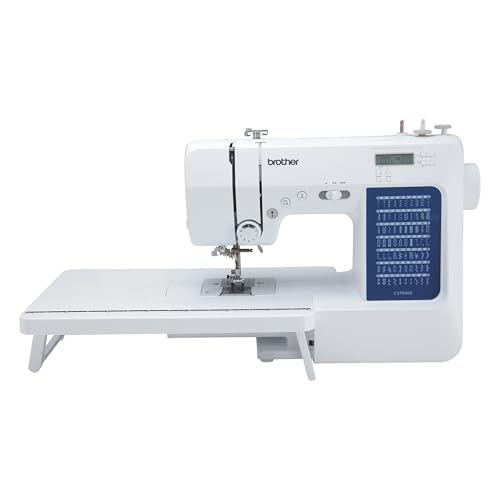
Best for: Quilters and crafters who want computerized convenience with wide table support. Why selected: 70 built-in stitches and a quilt guide make it a versatile option for projects that mix fabric types. Caution: Computerized features require power and may involve a learning curve for new users.
SINGER Heavy Duty 4432 (Grey) High Speed Sewing Machine

Best for: Larger heavy-duty projects requiring speed. Why selected: A heavy-duty metal frame and a high sewing speed up to 1,100 stitches per minute support fast, thick-fabric sewing. Caution: Fewer built-in stitches than some models, which may limit decorative options for certain projects.
SINGER 4423 (Grey) High Speed Sewing Machine

Best for: Everyday sewers who want reliable power and flexibility. Why selected: 23 built-in stitches delivering 97 stitch applications with a strong motor, suitable for frequent use. Caution: Slightly fewer stitches than some other heavy-duty models, which might affect decorative options for complex projects.
Buying Guide
What to consider when choosing a thick-fabric sewing machine
- Motor power and speed: Look for at least 1,000 stitches per minute for thick fabrics to avoid slowdowns.
- Stitch variety: Choose models offering a mix of utility, decorative, and durable buttonholes to handle diverse projects.
- Metal frame durability: A sturdy frame improves stability when sewing multiple layers.
- Included accessories: Walking feet, needles for heavy fabrics, and a clear bobbin area help with thick materials.
- Ease of use: Automatic needle threader and simple threading paths reduce setup time, especially for thick fabrics.
- Maintenance needs: A clear bobbin cover and easy access to parts can simplify upkeep after heavy use.
- Portability vs. workspace: Heavy-duty machines are sturdy but bulkier; ensure your workspace accommodates them.
How to match a machine to your projects
- If you sew denim, canvas, or leather frequently, prioritize models with stronger motors and metal frames (like 4411, 4452, or 4432).
- For mixed-use households that also do crafts and alterations, consider machines with broader stitch options and accessory kits.
- New sewists may prefer models with automatic needle threaders and jam-resistant bobbins to reduce frustration.
Common questions
- What is the difference between heavy-duty and standard sewing machines? Heavy-duty machines typically have stronger motors, metal frames, and designs to handle multiple layers of thick fabric without bogging down.
- Are there free-arm options on heavy-duty machines? Many do offer a free-arm feature, useful for cuffs and sleeves even on sturdy models.
- Can these machines sew leather or faux leather? Yes, with the right needle, foot, and settings, many heavy-duty machines can handle leather and similar materials.
- Do I need specialized feet for heavy fabrics? Optional walking feet and non-stick feet are helpful for even feeding through thick layers.
- Is a computerized model better for thick fabrics? Computerized models add features and precision; for pure thick-fabric duty, a robust mechanical model can be simpler and more durable under heavy use.
- Should I buy extra accessories? Yes, an accessory kit with feet and a seam guide can improve results on thick fabrics.
FAQ
- What defines a “heavy-duty” sewing machine? A model built with a powerful motor, a sturdy metal frame, and capabilities to sew multiple thick layers without skipping stitches.
- Can I sew denim on all listed machines? Most listed machines can sew denim with proper needle and foot; verify compatibility with your preferred needle type and fabric thickness.
- Is the speed important for thick fabrics? Higher top speed helps complete seams quickly on thick materials, but control and stitch selection matter too.
- Do these include walking feet? Some kits include accessory feet; check the product listing for included items and consider purchasing a walking foot if frequent thick fabrics are used.
- Are pink or colored editions just cosmetic? Editions may feature color variants but share core mechanical performance with their standard counterparts.
- Which model is best for beginners? A model with auto needle threader, clear bobbin view, and straightforward threading pathways is typically best for new sewists.
Add a Comment